The Lagos State Water Regulatory Commission (LASWARCO) has said it is set to enforce regulations and licensing within the packaged water services industry.
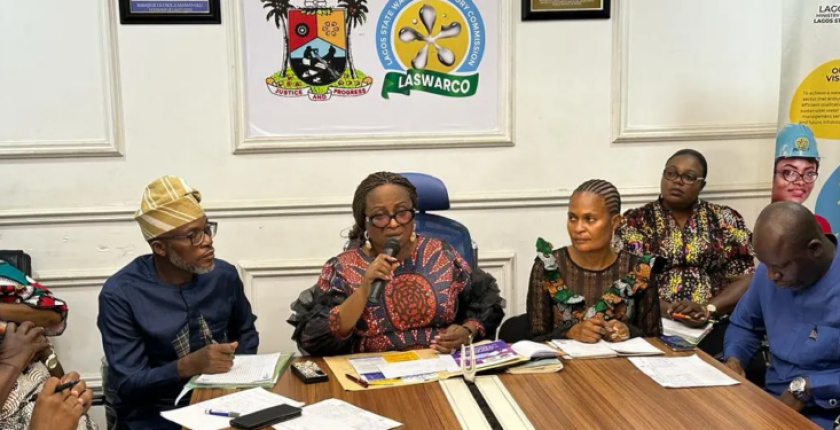
Mrs. ‘Funke Adepoju, the Executive Secretary of LASWARCO, emphasized this at a recent meeting with the Executive members of the Association for Table Water Producers (ATWAP) held in Alausa, Ikeja.
The meeting, organized by LASWARCO, aimed to reinforce guidelines for packaged water services and ensure compliance with regulations governing its operations, particularly by key stakeholders in the industry.
The Enforcement
- Mrs. Adepoju reiterated that the guidelines issued by LASWARCO, in line with the Environmental Management Protection Law of 2017, would apply to Packaged Water Services Operators in Lagos State and would be interpreted by the Law.
- She highlighted the importance of collaboration to guarantee the delivery of wholesome water to Lagosians, emphasizing the collective responsibility of stakeholders.
- Adepoju informed the Association about ongoing initiatives to introduce certification plaques for licensed and compliant operators.
- These plaques would serve as a mark of quality assurance and be prominently displayed on certified operators’ premises and delivery vehicles.
- She also disclosed plans to automate and streamline all processes, from registration to license application, identity generation, document uploading, and payment procedures.
In response, Mrs. Omolabake Mosaku, the Chairperson of the Association, commended LASWARCO for its open-door policy and expressed the Association’s readiness to collaborate further with the Lagos State Government.
- She stated, “As law-abiding citizens, we are excited about the proposed plaques of quality assurance and are ready to comply with the Law geared towards best practices and improved service delivery. We look forward to working closely with the Commission through enhanced coordination of our members.”
The collaborative efforts between LASWARCO and ATWAP underscore the importance of regulatory oversight in ensuring safe and high-quality packaged water services to the residents of Lagos State.
The proposed automation of processes is expected to enhance efficiency and transparency in regulatory operations.
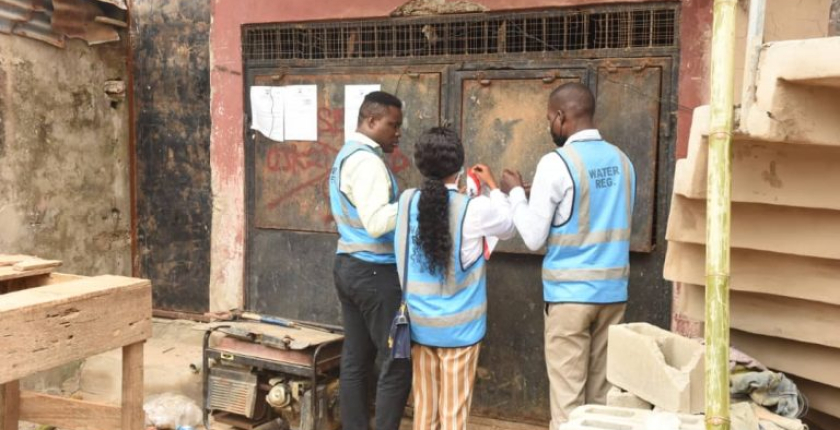
The enforcement team of the Lagos State Water Regulatory Commission (LASWARCO) has shutdown 30 water factories across the state for various infractions.
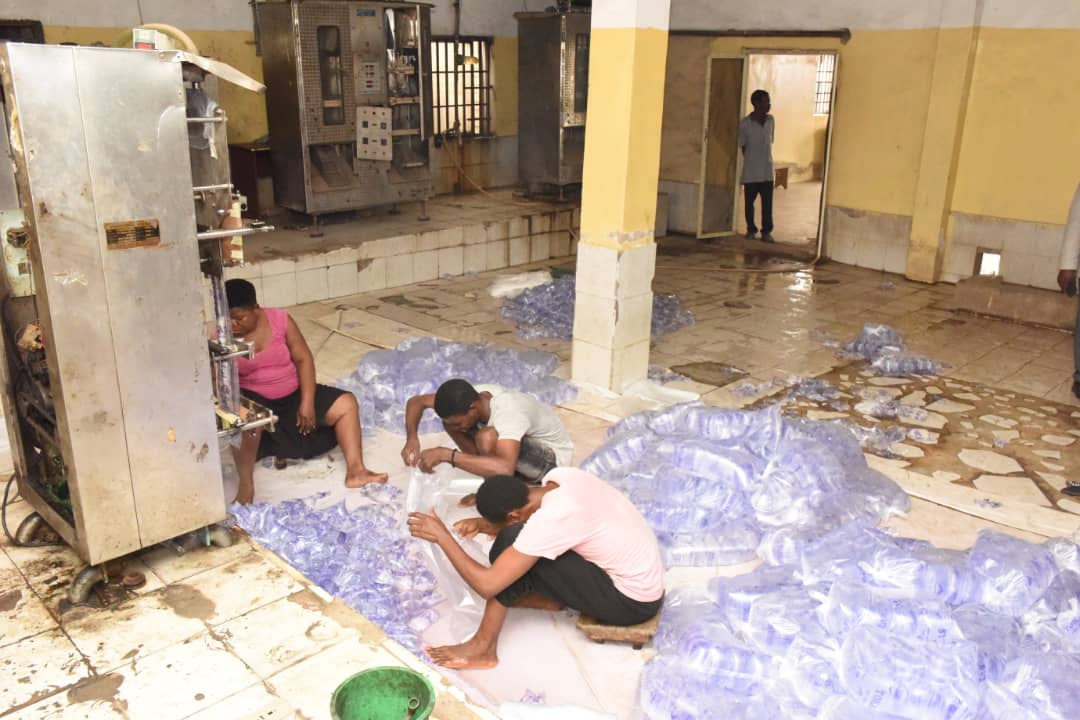
These infractions range from unhygienic production environment, failure to comply with regulatory provisions as well as operating without adhering to good manufacturing practices.
Executive Secretary of LASWARCO, Mrs Funke Adepoju said the enforcement was in line with the mandate of the commission towards protecting residents from unhygienic water consumption, just as she said that the exercise would be sustained.
She said prior to the enforcement, LASWARCO had taken steps to engage and sensitize producers on best practices in the interest of residents, and also financial viability of their investments.
According to her, “In as much as we have the mandate to ensure that operators remain in business, we also cannot fold our arms and allow infractions to fester without being addressed. The primary regulatory mandate of the Commission is to ensure that operators in the water abstraction, production and distribution industry comply with best manufacturing procedures to safeguard the health of the people.”
She said the level of poor and unwholesome practices discovered in some water factories in the state was not only disheartening but frightening, vowing that LASWARCO would do all within its powers to ward off any attempt to put the lives of residents in jeopardy.
“We found out that some factories that were earlier sealed were operating after the seal order was unsealed by their officials, while some were operating in very dirty environment and below regulatory standards.
“As the regulatory body empowered by Section 313 (h) of the Lagos State Environmental Management Protection Law, 2017, to regulate the activities of those engaged in the provision, consumption, treatment, packaging, sales and supply of bottled drinking water contained in bottles or polythene bags, our principal interest is to ensure acceptable standards.”
She said the commitment of the present administration of Governor Babajide Sanwo-Olu is towards ensuring that residents have access to potable and safe drinking water in line with the THEMES Agenda and goal 6 of the Sustainable Development Goals.

Giving details of the enforcement, Adepoju said: “the enforcement team of LASWARCO visited some water production factories in the state with on-site testing kits and the result confirmed that most of them are operating far below safety parameters.
Besides, Adepoju said the factories would remain sealed until their owners comply with all safety procedures and duly register for further monitoring in order to facilitate compliance with best practices.
She urged residents to report any water production factory in their neighborhood that is suspected to be involved in unwholesome practices to the Commission for appropriate action, saying it was important for the people to key into the Safe Water Campaign of the Commission and work with the government to protect them.
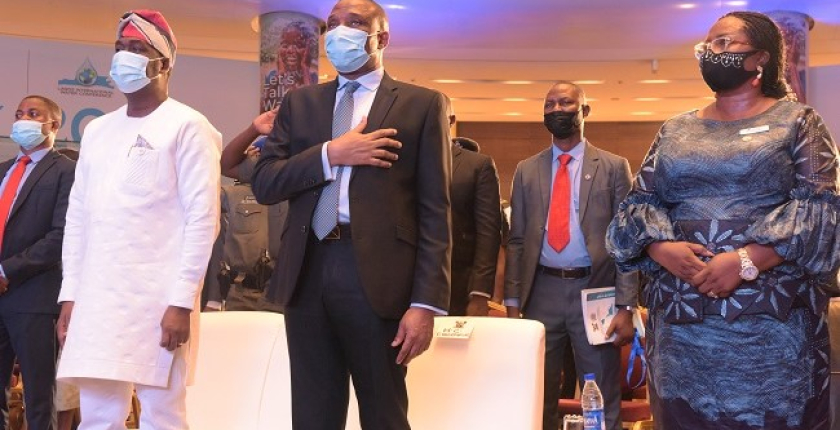
Lagos State Governor, Mr. Babajide Sanwo-Olu, on Wednesday, June 23, 2021 said the state government was working assiduously to bridge the huge deficit in water supply to residents, assuring that the phase II of Adiyan Water Project which now stands at 80 per cent completion stage would soon become operational.
Sanwo-Olu, who spoke at the second edition of annual International Water Conference organised by the Lagos State Water Regulatory Commission (LASWARCO) held on Victoria Island, said the state government was quite aware of the 540 million gallons per day (MGD) demand and every necessary effort would be mustered to ensure residents have access to clean and safe water.
The governor, who was represented by the Deputy Governor, Dr. Obafemi Hamzat, said: “The Lagos State Water Supply Master Plan estimates daily water demand in the city at 540 million gallons per day (MGD) but production by the Lagos State Water Corporation (LSWC) stands at 210 MGD. This shows a clear deficit of over 300MGD, which translates to less than 40% access to clean, and safe water.
“As a government, we are not oblivious of this gap and its consequences on the health of our populace. In order to close this gap, I toured the Lagos Water Corporation Facilities at Adiyan, Iju and Akute at the inception of my administration.
“We have expended resources on these facilities, and I am happy to tell you that the Adiyan II plant that will bring additional 70 MGD to the already existing water capacity will soon become operational.”
He said the conference, with the theme: “Water Security and Investment Opportunities in Megacities: A case of Lagos State”, was targeted at harnessing how Lagos as a state and an emerging Smart City can develop ideas for water security and to create investment opportunities in the water sector like other megacities.
He added that the nexus between water security and socio-economic growth could not be overemphasised, just as he described access to clean water as a fundamental right, which to a large extent determines how well people flourish even when other basic rights are in place.
The governor said that, with a population of over 22 million people, there was no better time than now to make calculated decisions on what must be done to actualise the goal of an efficient water sector that is complemented with high returns on smart investments, adding that concerted efforts have also been made to regulate the sector to protect residents.
“As you know, health and environment are two key pillars of my administration’s T.H.E.M.E.S. Development Agenda and this conference is vital to the accomplishment of some of our key deliverables for these pivotal sectors.
“With the Sustainable Development Goal 6 as our anchor, we have committed major resources to groundwater quality control, drinking water quality regulation, and packaged water service oversight. All these are being done to improve Lagosians’ productivity and quality of life.
“Through LASWARCO, we have been able to curb unwholesome water production and indiscriminate drilling of boreholes, which is a major contributor to lower aquifer and flooding,” he said.
Earlier, Commissioner for the Environment and Water Resources, Mr Tunji Bello, said the conference was intentionally organised to focus on solutions and results capable of unbundling the obstacles to financial viability and access to clean water and sanitation through experimental knowledge, and also significantly improve on the indices of water supply, sanitation and hygiene (WASH) in the state.
Executive Secretary of LASWARCO, Mrs Funke Adepoju, said the conference was aimed at deepening conversations around expanding access to water and investment opportunities in the state, adding that recommendations at the end of the conference would be very useful, going forward.
In her goodwill message, Country Director, WaterAid Nigeria, Evelyn Mere, said for Lagos to meet the Sustainable Development Goals (SDGs) targets on universal access to water, an annual sector spending of N300 billion would have to be committed, while Nigeria would have to spend $2.1 billion annually in capital, operations and maintenance to meet SDG 6.

 And then Add to Home Screen.
